

How Energy-Efficient Roof Coatings Can Reduce Cooling Costs in Florida and Georgia
Discover how reflective roof coatings help manage heat, improve building efficiency, and potentially lower air-conditioning costs for commercial properties.
How Energy-Efficient Roof Coatings Can Reduce Cooling Costs in Florida and Georgia
Reflective roof coatings can help commercial buildings stay cooler, reduce heat transfer, and potentially lower air-conditioning costs. But how much energy can a roof coating actually save in Florida and Georgia?
For commercial property owners, energy efficiency is more than a buzzword. Rising electricity costs, long cooling seasons, and the constant challenge of maintaining a comfortable indoor environment make building efficiency a practical business concern.
In Florida and Georgia, the roof plays an important role in how much heat enters a commercial building. Dark roofing materials can absorb substantial amounts of solar energy throughout the day. That heat can transfer into the building, increasing the workload on the HVAC system.
An energy-efficient roof coating in Florida or Georgia may help address that problem. Reflective coatings can reduce roof temperatures and limit heat transfer, potentially lowering cooling demand.
However, the amount of energy a building saves depends on several factors. Let’s look at what roof coatings can realistically accomplish and what property owners should consider before investing in a roof restoration project.
How Do Reflective Roof Coatings Improve Energy Efficiency?
Reflective roof coatings work primarily by changing how the roof responds to sunlight.
Traditional dark-colored roofing materials absorb solar radiation. As the roof heats up, some of that heat transfers through the roofing assembly and into the building below.
A reflective coating, particularly a white or light-colored coating, reflects more sunlight away from the roof surface. This helps reduce the amount of solar heat the roof absorbs.
Two important performance characteristics determine how well a roof surface manages heat:
- Solar reflectance: The percentage of sunlight a surface reflects instead of absorbing.
- Thermal emittance: The ability of a surface to release absorbed heat through infrared radiation.
A roof with high solar reflectance and high thermal emittance can remain considerably cooler than a conventional dark roof during sunny weather.
How Much Energy Can a Roof Coating Actually Save?
This is one of the most important questions for any commercial property owner.
The honest answer is that there is no single energy-savings percentage that applies to every building in Florida or Georgia. A reflective roof coating may produce meaningful cooling savings in one building and a much smaller reduction in another.
Building characteristics make a major difference.
Roof Surface Temperature Reduction
One of the most immediate benefits of a reflective roof coating is a cooler roof surface.
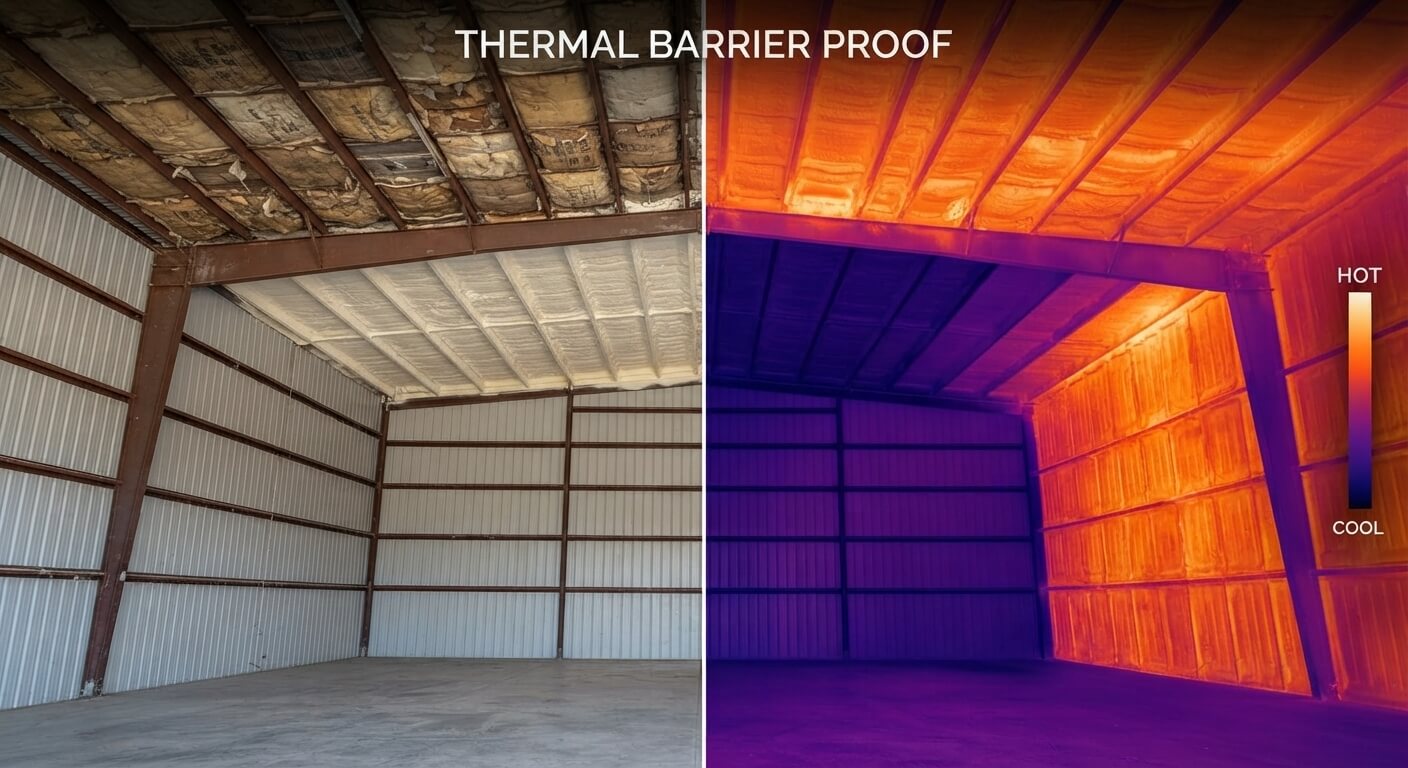
ENERGY STAR reports that a clean white roof reflecting approximately 80% of sunlight may remain about 50°F cooler than a gray roof reflecting approximately 20% of sunlight during a typical summer afternoon.
That difference does not mean the building’s interior temperature will automatically drop by 50°F. Roof temperature and indoor temperature are two different measurements.
Instead, a cooler roof can reduce the amount of heat transferred into the building. That may allow the HVAC system to operate less frequently or for shorter periods during hot weather.
Potential Reduction in Cooling Demand
Florida energy-efficiency resources have cited potential reductions in peak cooling demand of approximately 10% to 15% for certain energy-efficient roofing applications.
However, this figure should not be treated as a guaranteed reduction in every building’s electricity bill. Peak cooling demand measures the amount of cooling power needed during periods of high heat. It is not the same as total annual energy consumption.
The actual impact of a roof coating will depend on the building’s design, insulation, HVAC equipment, operating schedule, and existing roofing material.
For example, a warehouse with a large roof, limited insulation, and substantial air-conditioning use may have more opportunity for savings than a heavily insulated building with minimal cooling demand.
Possible Electricity Cost Savings
A reflective roof coating may reduce the amount of electricity a building uses for air conditioning. However, the dollar savings depend on how much energy the building currently consumes and the property’s electricity rate.
Consider a simplified example:
- A commercial building uses 100,000 kWh annually for cooling.
- A roof improvement reduces cooling-related electricity use by 5%.
- The building saves approximately 5,000 kWh per year.
At an illustrative electricity rate of $0.12 per kWh, that would represent approximately $600 in annual cooling-related electricity savings.
This is only an example, not a prediction for a particular building. Actual savings may be higher or lower, and the coating’s installation cost must also be considered when evaluating the return on investment.
Why Roof Coatings Can Be Especially Useful in Florida
Florida commercial buildings face long cooling seasons, strong sunlight, high humidity, and frequent periods of intense heat.
These conditions can increase the importance of managing solar heat gain.
Florida’s Intense Sunlight
Commercial roofs in Florida can receive significant solar exposure throughout the year. A dark roof may absorb large amounts of heat during the afternoon, particularly during the summer.
A reflective roof coating can help redirect some of that solar energy away from the building.
For properties with aging roofing systems, a coating may provide both a roof-restoration benefit and an opportunity to improve the roof’s reflective performance.
Long Cooling Seasons
Florida buildings often rely on air conditioning for much of the year.
When a building requires cooling for extended periods, even a modest reduction in cooling demand may contribute to lower annual electricity consumption.
The potential benefit is particularly relevant for buildings with large roof areas, air-conditioned interior spaces, and roofing systems that absorb substantial solar heat.
Flat and Low-Slope Commercial Roofs
Many commercial properties use flat or low-slope roofing systems. These roofs can offer a large surface area for reflective coatings.
Silicone, acrylic, and other reflective roof-coating systems may be suitable for certain commercial roofing assemblies. The correct product depends on the existing roof, climate exposure, drainage conditions, and manufacturer’s requirements.
What About Energy Efficiency in Georgia?
Georgia also experiences hot, humid summers that create substantial demand for air conditioning.
Reflective roof coatings may help commercial buildings in Georgia manage solar heat gain and reduce the amount of heat transferred through the roof.
However, Georgia’s climate differs from Florida’s in several ways. Some parts of Georgia experience cooler winter conditions, which means energy-efficiency decisions should consider both summer cooling and winter heating.
A highly reflective roof can reduce heat gain during the summer, but it may also reduce beneficial solar heat gain during cooler months.
That does not mean reflective coatings are unsuitable for Georgia. It means property owners should evaluate the building’s year-round energy use rather than focusing only on summer temperatures.
The U.S. Department of Energy recommends considering climate, insulation, roof construction, and heating and cooling requirements when evaluating whether a cool roof is a cost-effective investment.
Which Buildings May Benefit Most From Reflective Roof Coatings?
Energy-efficient roof coatings may be particularly useful for commercial properties with certain characteristics.
- Large flat or low-slope roofing systems.
- Dark-colored roofs that absorb substantial solar heat.
- Buildings with high air-conditioning demand.
- Roof assemblies with limited or older insulation.
- Warehouses, retail buildings, offices, and industrial facilities.
- Buildings located in hot, sunny areas of Florida or Georgia.
- Existing roofs that are structurally sound and suitable for restoration.
On the other hand, a reflective coating may provide limited energy benefits when a building already has excellent insulation, highly efficient HVAC equipment, or relatively low cooling demand.
Our roofing team can evaluate the condition of your existing roof and help determine whether a reflective coating and roof restoration system makes sense for your property.
Can a Roof Coating Lower Your Entire Electricity Bill?
It is important to understand that a roof coating primarily affects cooling-related energy use.
It does not directly reduce electricity used by:
- Lighting.
- Computers and office equipment.
- Manufacturing machinery.
- Refrigeration equipment.
- Water heaters.
- Other building systems.
If air conditioning represents a large portion of a building’s electricity consumption, reducing cooling demand may have a noticeable impact on the overall utility bill.
However, if cooling represents only a small percentage of total energy use, the effect of a roof coating on the entire electricity bill may be more limited.
That is why energy savings should be evaluated using the building’s actual utility data whenever possible.
Silicone Roof Coatings and Energy Performance
Silicone roof coatings are commonly used in commercial roof-restoration projects because of their waterproofing properties, UV resistance, and ability to create a seamless protective membrane.
Many silicone coatings are available in white or other reflective finishes.
When a silicone coating has strong solar-reflective properties, it may help reduce the amount of solar heat absorbed by the roof. This can contribute to improved thermal performance during hot weather.
However, not every silicone coating has the same energy-performance characteristics.
When evaluating a product, property owners should ask about:
- Initial solar reflectance.
- Aged solar reflectance.
- Thermal emittance.
- Solar Reflectance Index, or SRI, when available.
- Expected coating performance over time.
- Compatibility with the existing roofing system.
Reflective performance can change as a coating weathers or accumulates dirt. Proper installation, maintenance, and periodic inspection can help preserve the performance of the roofing system.
What Other Factors Affect Roof-Coating Energy Savings?
The coating itself is only one part of the equation.
Roof Insulation
Insulation affects how much heat passes from the roof into the building.
A building with limited insulation may experience more noticeable benefits from reducing roof temperatures. A highly insulated building may see a smaller reduction in cooling demand because less heat reaches the interior in the first place.
HVAC Efficiency
The efficiency and condition of the HVAC system also matter.
A modern, properly maintained system may respond differently to reduced heat gain than an older system that already struggles to maintain indoor temperatures.
Roof Color and Existing Material
Replacing a dark, heat-absorbing roof surface with a highly reflective coating may create a greater change in solar performance than coating a roof that is already light-colored and reflective.
Building Use and Operating Schedule
A building that operates during the hottest part of the day may have more opportunity to benefit from reduced solar heat gain.
For example, a commercial facility operating eight to twelve hours daily may experience different results from a warehouse that has minimal daytime occupancy.
Roof Condition
A roof coating cannot correct every roofing problem.
If the existing roof has extensive moisture damage, structural deterioration, or significant underlying defects, restoration may not be appropriate.
The roof should be inspected and repaired as necessary before any coating is applied.
How to Estimate Your Potential Energy Savings
Before investing in a reflective roof coating, commercial property owners should look at the building’s current energy performance.
Useful information may include:
- Recent electricity bills.
- Annual and summer cooling costs.
- Roof size and existing roofing material.
- Roof insulation levels.
- HVAC equipment age and efficiency.
- Building operating hours.
- Existing roof color and condition.
For a more detailed evaluation, our team can assess your existing roofing system and explain how a reflective roof restoration may fit into your property’s overall energy-efficiency goals.
Is an Energy-Efficient Roof Coating Worth the Investment?
That depends on the condition of the existing roof, the cost of the coating project, and the building’s potential for reduced cooling demand.
A reflective roof coating may be worth considering when a commercial roof is aging but remains structurally sound and suitable for restoration.
In that situation, the property owner may be able to address waterproofing concerns, improve the roof’s reflective performance, and extend the useful life of the existing roofing system.
However, energy savings alone should not be used to justify every roof-coating project. The expected reduction in cooling costs should be considered alongside the coating’s installation cost, maintenance requirements, roof condition, and anticipated service life.
Improve Your Commercial Roof’s Energy Performance
Reflective roof coatings can offer meaningful benefits for commercial buildings in Florida and Georgia. By reflecting more sunlight and reducing roof temperatures, these systems may help lower cooling demand and improve building energy performance.
Still, realistic savings depend on the building. A roof coating is not a guaranteed way to reduce an entire electricity bill by a specific percentage.
That’s where a professional roof evaluation can make a difference.
Our commercial roofing team serves property owners throughout Florida and Georgia, providing professional roof inspections, restoration, and energy-efficient roof coating solutions. We’ll evaluate your existing roof, discuss its condition, and help you determine whether a reflective coating is a practical option for your building.
If you’re dealing with an aging commercial roof, high cooling costs, or a roof that absorbs significant heat, contact us today to schedule a professional roof evaluation.
Let’s take a closer look at your roof and determine whether a high-performance coating system can help protect your building while improving its energy efficiency.