

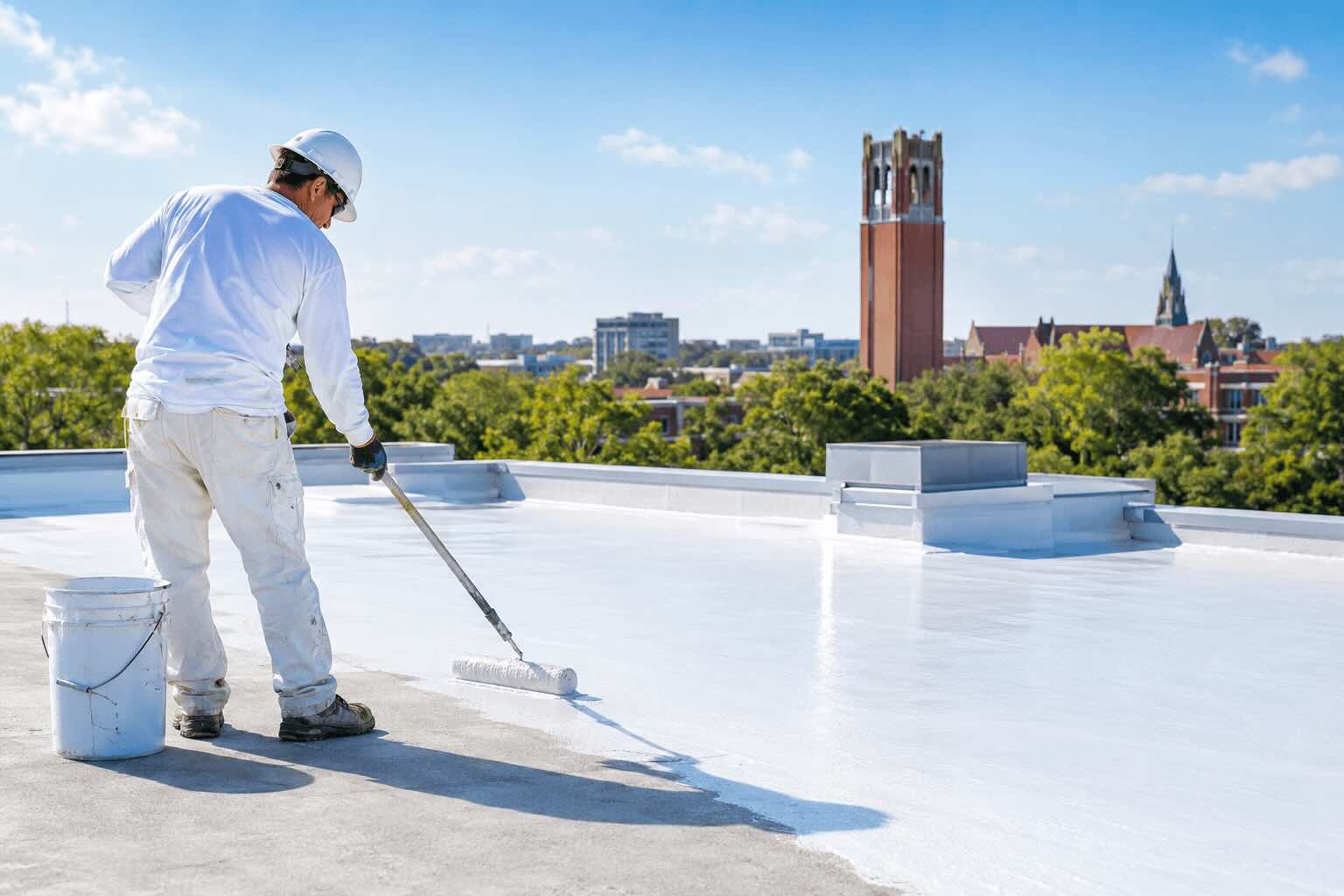
Silicone Roof Coating in Gainesville FL: A Smart Option for Commercial Roof Restoration
Protect your commercial roof from Florida’s intense sun, heavy rain, and everyday wear with a seamless silicone roof coating designed to extend the life of your existing roofing system.
If you own or manage a commercial property in Gainesville, FL, you already know how much Florida weather can put your roof to the test. Intense UV exposure, high temperatures, heavy afternoon storms, humidity, and standing water can all contribute to premature roof deterioration.
But an aging roof does not always mean you need a complete tear-off and replacement.
A silicone roof coating in Gainesville, FL may provide a practical way to restore and protect a structurally sound commercial roof while extending its service life and reducing the disruption associated with a traditional reroofing project.
What Is a Silicone Roof Coating?
A silicone roof coating is a fluid-applied roofing system that is installed directly over an existing roof when the underlying roofing system is suitable for restoration.
Once cured, the coating creates a seamless, waterproof membrane over the existing surface. Silicone coatings are designed to provide resistance to UV exposure and ponding water, making them a popular option for commercial buildings with flat or low-slope roofs.
Depending on the existing roof and manufacturer’s requirements, silicone coatings may be appropriate for substrates such as:
- TPO
- EPDM
- PVC
- Modified bitumen
- Built-up roofing
- Metal roofing
- Spray polyurethane foam roofing
The important part is determining whether the existing roof is a good candidate before applying any coating.
Why Silicone Roofing Makes Sense in Gainesville
Gainesville’s climate presents several challenges for commercial roofing systems.
The roof may spend hours exposed to intense Florida sunshine before afternoon thunderstorms bring large amounts of rain. Flat and low-slope roofs can also have areas where water does not drain quickly.
That combination makes waterproofing and UV resistance especially important.
Protection From Florida’s UV Exposure
Constant sunlight can accelerate the aging of roofing materials. Silicone coatings are formulated to provide strong UV resistance and can also create a reflective surface that reduces the amount of solar heat absorbed by the roof.
A reflective roof surface may help reduce heat transfer into the building, which can be particularly useful during Gainesville’s long cooling season.
Resistance to Ponding Water
Ponding water is one of the biggest concerns with many low-slope commercial roofs.
Silicone coatings are designed to resist degradation from ponding water, making them an option worth considering when drainage conditions are a concern.
That does not mean drainage problems should simply be ignored. Drains, scuppers, flashing, and other problem areas should still be evaluated and addressed as part of the restoration process.
A Seamless Waterproofing Layer
Unlike a roof made up of numerous overlapping materials and seams, a properly installed fluid-applied coating creates a continuous membrane across the roof surface.
The coating can also be detailed around penetrations, flashings, curbs, and other areas where leaks commonly develop.
Extend the Life of an Existing Roof
One of the biggest advantages of a silicone roof restoration is that the existing roof can remain in place when it is structurally sound and otherwise suitable for coating.
Rather than automatically removing the existing roofing system, a contractor can evaluate its condition and determine whether restoration makes sense.
This can potentially extend the useful life of the roof while postponing a much more extensive replacement project.
Silicone Roof Coating vs. Roof Replacement
A full commercial roof replacement is sometimes necessary. If the existing roofing system has extensive moisture damage, structural problems, or other significant deterioration, coating it may not be appropriate.
However, a roof that is aging but still fundamentally sound may be a different story.
A silicone restoration can eliminate some of the work associated with a traditional tear-off, including removal and disposal of the existing roofing materials. That can mean less material going to the landfill and less disruption to the property.
The right choice should always come from an inspection rather than simply choosing the least expensive option.
What Happens During a Silicone Roof Coating Project?
A quality roof coating project involves much more than simply spraying silicone across an existing roof.
Roof Inspection
The first step is evaluating the existing roofing system.
The contractor should look for leaks, damaged areas, wet insulation, deteriorated materials, drainage problems, failed seams, penetrations, and other conditions that could affect the coating.
Surface Preparation
Proper preparation is critical to coating performance.
The roof may need to be cleaned and repaired before the coating is applied. Areas requiring additional attention should be addressed before the silicone goes down.
Detail Work
Flashing, seams, penetrations, curbs, drains, and other transitions need to be properly prepared and detailed.
These areas are especially important because a roof coating cannot compensate for underlying problems that were never repaired.
Silicone Application
Once the roof has been prepared, the silicone coating is applied according to the manufacturer’s specifications.
Application thickness and coverage are important because the coating needs to form a continuous protective membrane.
Final Inspection
After installation, the finished roof should be inspected to verify coverage, detailing, and overall workmanship.
A professional roofing contractor should also provide information about the coating system, maintenance requirements, and warranty documentation when applicable.
Is Your Gainesville Commercial Roof a Candidate?
Not every roof should receive a silicone coating.
A coating may be worth considering when:
- The existing roof is structurally sound.
- The roof has reached an age where restoration makes sense.
- The existing membrane has weathering but remains viable.
- The roof has recurring waterproofing concerns that can be addressed through restoration.
- The building owner wants to avoid an immediate full tear-off.
- The property has a flat or low-slope commercial roof.
- The underlying insulation and roofing materials are suitable for restoration.
On the other hand, extensive moisture intrusion, structural deterioration, or severely damaged roofing materials may make replacement a more appropriate solution.
That is why a professional inspection should come first.
Why Proper Installation Matters
Silicone roof coating is not simply roofing paint.
The performance of a coating system depends on the existing roof, surface preparation, application conditions, coating thickness, detailing, and compatibility between the coating and substrate.
Even high-quality silicone products cannot compensate for poor preparation or an unsuitable roof.
For that reason, Gainesville property owners should look for a roofing contractor who understands commercial roof restoration and can explain why a silicone coating is appropriate for the specific building.
Protect Your Gainesville Commercial Roof
If your commercial roof is showing its age, don’t automatically assume that a complete replacement is your only option.
A professional evaluation can help determine whether silicone roof coating in Gainesville, FL could restore the roof, improve waterproofing, provide UV protection, and extend its useful service life.
The goal is not simply to put another layer over an old roof. The goal is to determine whether the existing roofing system can be properly restored and protected for the years ahead.
If your Gainesville commercial property is dealing with an aging flat or low-slope roof, schedule a professional roof inspection and find out whether silicone roof restoration is a practical option for your building.